RAF Music - Gulf War (1991)
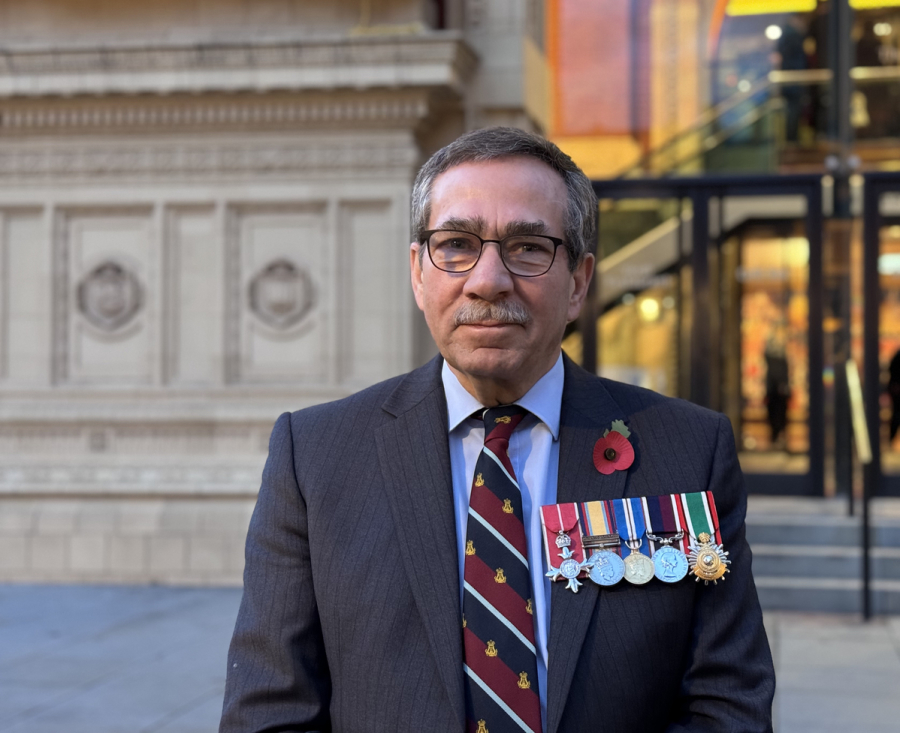 Malcolm Goodman MBE, Royal British Legion Festival of Remembrance, Royal Albert Hall 2024
As the UK’s military musicians joined the front line in a new medical support role at field hospitals in Saudi Arabia, former Royal Air Force musician Malcolm Goodman, then serving with the Western Band of the Royal Air Force (RAF Locking), recalls his very personal experience of war along with photos and quotations from a 'bluey' letter sent home on 20 February 1991...
NOTE: Following the 1991 Gulf War there were a number of Freedom of Information requests sent to MOD by Alvin Pritchard regarding the actual dangers deployed personnel really faced in Saudi Arabia, as so much innacurate information was given at the time. See the following link to read some interesting post-war information that has now been revealed... https://www.whatdotheyknow.com/user/alvin_pritchard
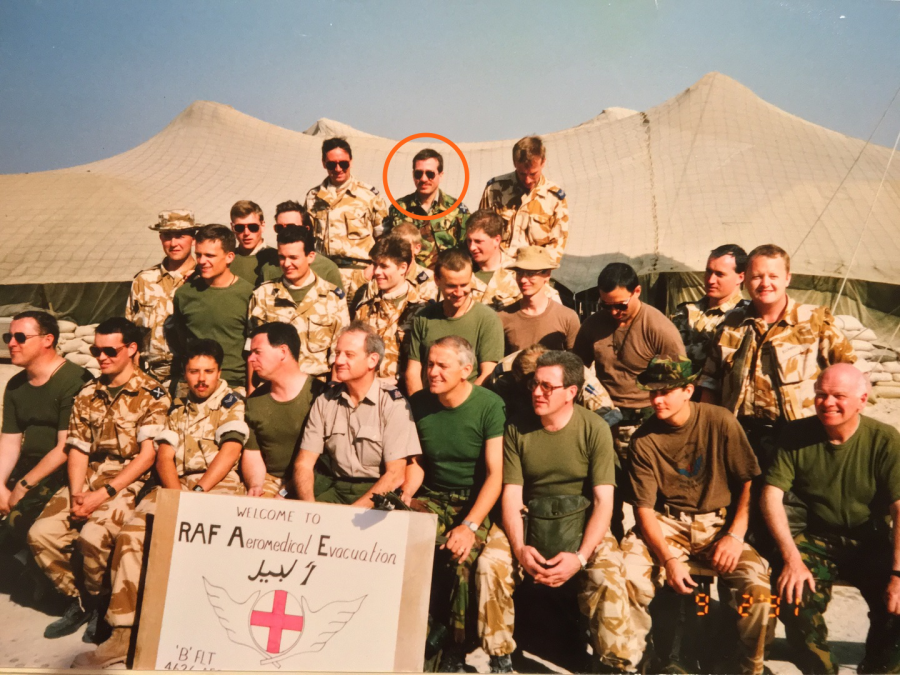 Malcolm Goodman (circled) with other RAF musicians and the RAF Aeromedical Evacuation Squadron, Al Jubayl Field Hospital, Saudi Arabia (9 Feb 1991)
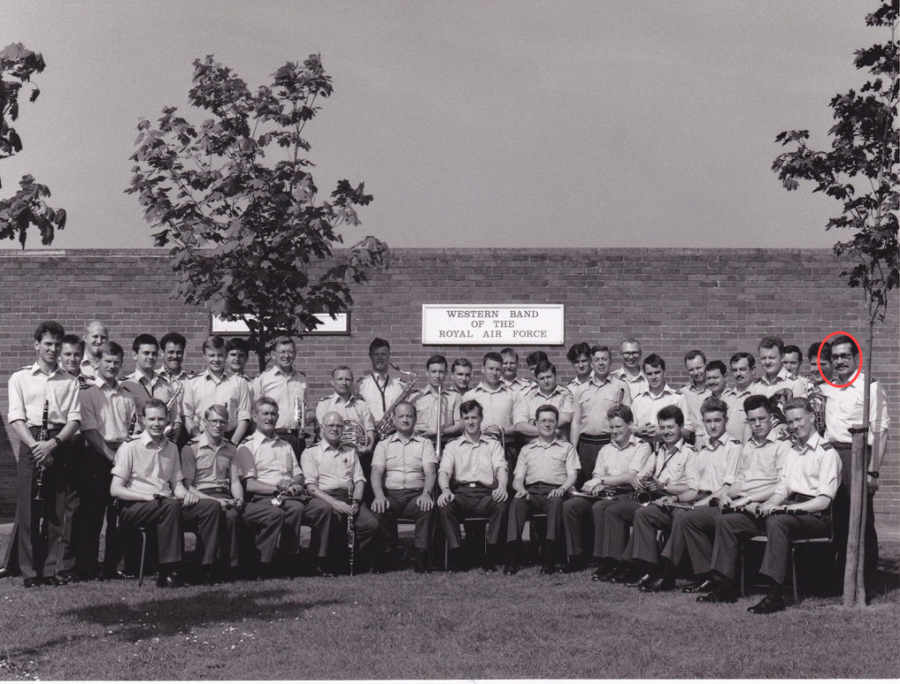 The Western Band of the Royal Air Force (RAF Locking 1991)
For members of the Western Band of the Royal Air Force this all started late in 1990 following a briefing at the bandroom at RAF Locking (Weston-Super-Mare).
Having just returned from a concert tour of Northern Ireland, as usual we unloaded our instruments, but before going home were summoned to a ‘briefing’ by the Director of Music, Flying Officer Duncan Stubbs.
Aware as we were of the developing situation in the Middle East, our worst fears were realised as we were informed of a new medical ‘war role’ for all UK military musicians, and our immediate training for deployment on active service to Saudi Arabia.
“…get your life in order…”
The serious reality of the situation became clear to us all with the advice to “get your life in order” — the meaning of which needed no explanation…! Currently living in married quarters, for me this meant confirming my will, and most importantly finding and buying a house in record time so my wife and our three young daughters had somewhere to live if the unthinkable was to happen to me...
“…Cock, hook, and look…”
What then followed over the next 6 weeks was medical and weapons training, the like of which we’d not experienced before. Trained with the weapons of the time, as we would have to protect ourselves and our hospital casualties, the familiar ‘cock, hook and look’ routine to unload a weapon safely really had become one of the most important safety skills.
“…blot, bang, rub…”
However, the expression ‘blot, bang rub’ also became fixed in our minds, as we were further trained in decontamination procedures following any nuclear, chemical or biological attack, whilst still fully ‘suited up’ in IPE (Individual Protection Equipment) and the S10 respirator. However, little did we know the instruction to get our respirator on within 8 seconds of any air raid warning to minimise the effects of a nerve agent would become our most frequently used action, with the many terrifying scud missile attacks that we were to discover awaited our deployment. And if we still needed any further reminder of the potential effects of some of the weapons Saddam Hussein, 5th President of Iraq, might use against coalition forces, we were also taught how to administer the frightening needle of the combopen autoject into our own or someone else’s thigh if suffering the effects of a nerve agent.
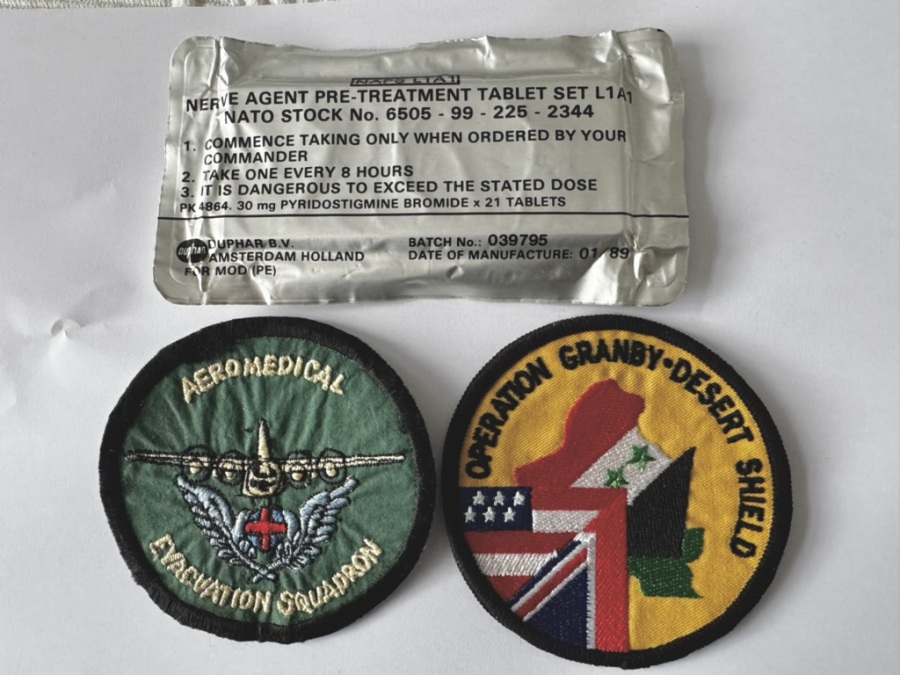 Nerve Agent Pre-Treatment Set (NAPS Tablets)
As we now know, the combopen actually contained Pralidoxime Methane Sulphate, Avisafone, Atropine Sulphate and Citric Acid Monohydrate – I’m pleased we didn’t actually use it…on anyone…!
Such fears did however make us much more accepting of the ‘cocktail’ of injections described by many as ‘experimental’, such as anthrax and bubonic plague (and many others) given before our departure, with yet more following our arrival in Saudi Arabia.
Our training was then complete once we’d been issued with our own supply of NAPS (Nerve Agent Pre-Treatment Set) and BATS (Biological Agent Treatment Set) tablets — which looking so innocent in their innocuous warning covered packaging, would put such fear in our minds when subsequently we were ordered to start taking them following the first scud missile attack.
And so after a rather sombre family Christmas 1990, the Western Band of the Royal Air Force along with members of the Central Band of the Royal Air Force and Band of the Royal Air Force College were ready for deployment, and finally took to the air onboard a troop carrying Kuwait Airlines 747 on 14 January 1991 — heading for a very uncertain future as part of the Gulf War….
However, we were very aware that members of the Band of RAF Regiment, Central Band and RAF Salon Orchestra had sadly missed their own family Christmas, owing to their earlier deployment in support of the establishment of the RAF War Hospital at Muharraq in Bahrain.
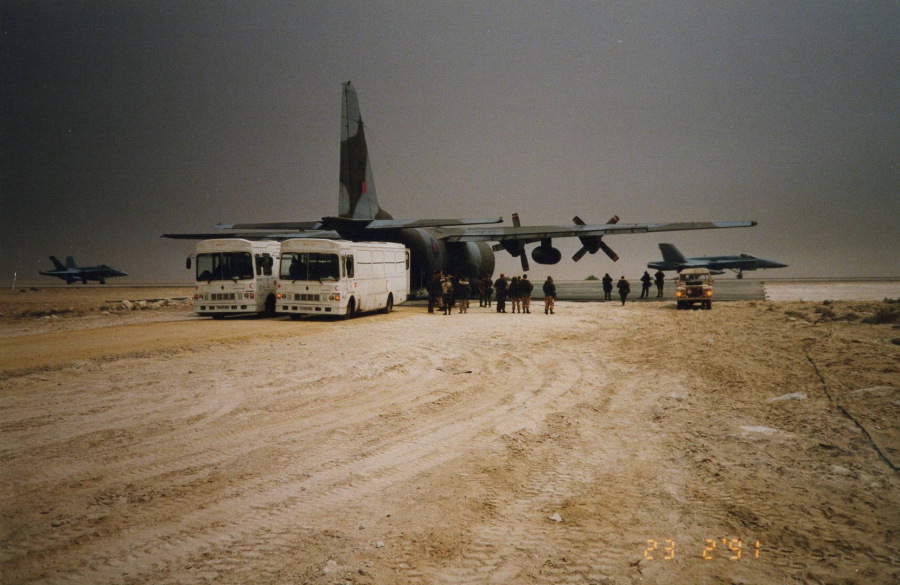 Casualty loading, Al Jubayl Field Hospital (23 Feb 1991)
All RAF musicians were about to have the same experience of war, wherever located…!
After some initial ‘theatre of operations’ arrival administration and some acclimatisation rest and food, we heard the news that the band would be split into two groups for deployment at different field hospitals in the desert — one at the forward location airport of Al Qasumah, and another at Al Jubayl airport 30 miles west of Jubayl city, where I was destined to work.
“…I’ve been here nearly 6 weeks, which is 5 weeks longer than I’ve lived in our new house in Worle…”
The plan had been for personnel at Al Qasumah to treat any casualties they received at their forward field hospital, then medevac them to our field hospital at the air head where further treatment could follow. Those fit to fly would then be repatriated home when hostilities made it safe to do so. However, both hospitals were only equipped with basic battlefield facilities…
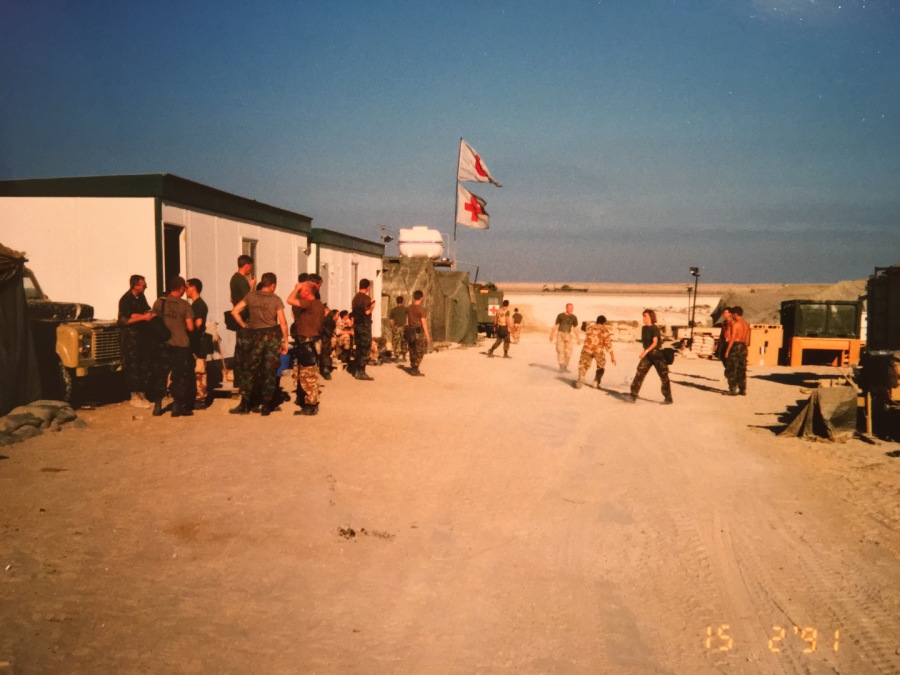 Al Jubayl Field Hospital (15 Feb 1991)
Now part of an operation of coalition forces from 35 nations against Iraq in response to its invasion and annexation of Kuwait, much of our training was in partnership with the US Air Force…and so began some rather more detailed and specific medical training, which also included understanding the very sad reality of battlefield patient triaging...
“…the first session was a lecture by the staff from a nearby US AES (Air Evacuation Squadron) on the subject of death…as we were expected to come across a lot of it…”
After only two days, our relative peace was shattered in the middle of the night with the first air raid. And so in what felt like blind panic and with a real fear for our lives, we put our respirators on whilst shouting ‘gas, gas, gas!’ as our training had taught us, hopefully within 8 seconds to avoid the potentially fatal effects of a chemical or nerve agent. Then followed the ever-complicated procedure of putting on our full NBC suits, gloves and helmet, whilst then checking each other with the ‘buddy buddy’ system to ensure everything was correct.
Of course, during our training this was all relatively easy, however in the real-life situation when any mistake might become fatal, none of this was easy when completely terrified, stressed and working against the clock…!
The air raids subsequently became a very regular and frightening occurrence – Indeed, I now read there were approximately 60 Scud Missile attacks, and with each one we’d be listening for the explosion of the warhead or the noise we hoped demonstrated it had been ‘taken out’ by the locally based US Patriot Missiles, whilst also desperately awaiting the relative safety of the ‘All Clear’ siren.
<< New image with text >>
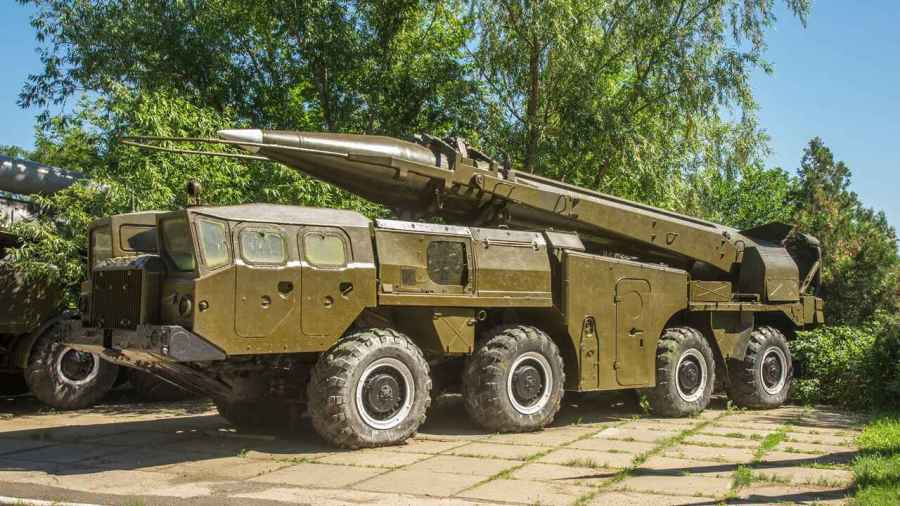 Iraqi Scud Missile, subsequently described as the 'most inaccurate missile on earth' following modifications for the 1991 Gulf War...
Note: Scud missiles were developed by the Soviet Union during the Cold War as a tactical ballistic missile with a maximum speed of Mach 5 (1.7km/s), capable of carrying a nuclear payload of 5 to 80 kilotons and a chemical warhead. However, its accuracy was later estimated as no better than half a mile.
The US Patriot missile had a maximum speed of Mach 4.1 and could fly at 79,500 feet. During the Gulf War the public was informed the missile had a near-perfect record intercepting 45 out of 47 scud missiles.
Following an investigation after the Gulf War a US House Committee on Government Operations concluded that there was not enough evidence to conclude there had been any scud missile interceptions at all. Consequently, the scud missile really was a very serious threat to us all…
“…it’s a sad fact of life that during war, for our own protection the BBC and other broadcast media must sometimes be a little short with the truth…”
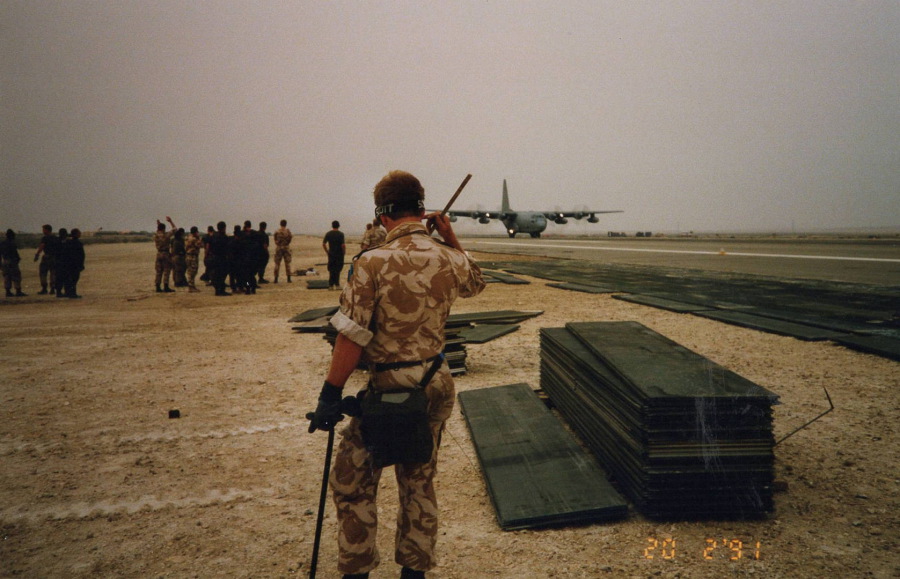 Building aircraft holding area for casualty loading, Al Jubayl Field Hospital (20 Feb 1991)
“…at times in our tents we can even watch the US news channel CNN…on occasions actually broadcasting live details of air raids we were experiencing at the time…however CNN will also broadcast miss-information for operational reasons…”
Logistical planning for what was being called the ‘Land War’ to come was still at an early stage, as we now had to create an aircraft movement area closer to the hospital tents. So, with the ‘help’ of the Royal Engineers, we began laying some large metal plates on the sand that when linked together would provide a small holding area for aircraft away from the main runway for casualty handling. By the end of the day we had laid 30 plates, leaving another 1,170 still to do before the task was complete…!
Constant activity of fighter and transport aircraft at Al Jubayl air head…
However, such work was done without any consideration to the fact we were working alongside an active runway still in use by various 747s and US Galaxy aircraft, and with no communication equipment, whilst aircraft wing tips were still passing over our heads. Realising the danger of such an operation we were eventually given two-way radios to communicate with Air Traffic Control, however with the F16s now also on the runway, the noise meant we couldn’t hear any radio ‘chat’.
Seeing the crazy situation, we were joined by US soldiers, which was just as well as it seemed the Royal Engineers had ignored the ‘This Way Up’ instruction written on the runway plates, thus we’d laid them all upside down…!
“…at that point the Royal Engineers left, and we spent the rest of the afternoon taking up all the plates and relaying them the correct way up…”
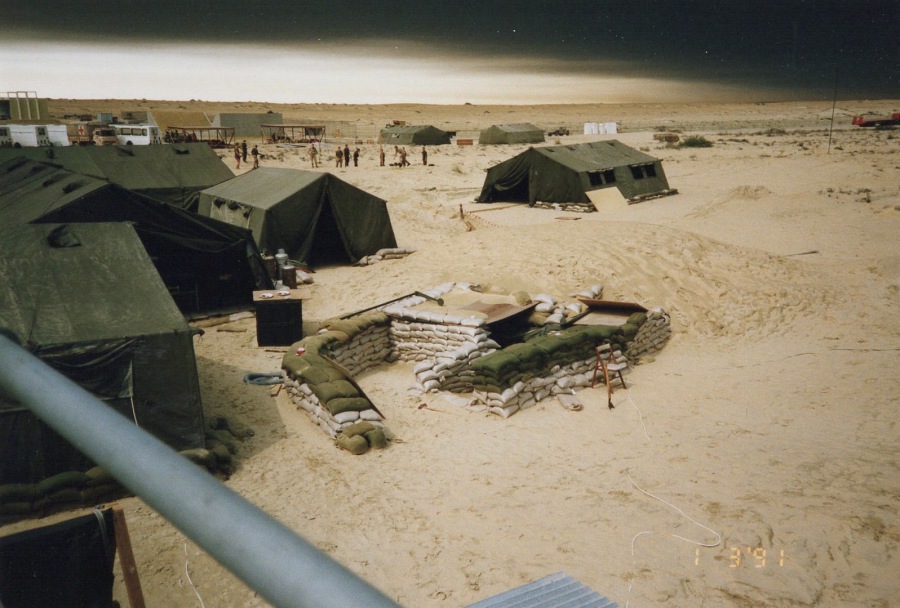 Hospital accommodation and desert air raid shelters, Al Jubayl Field Hospital (7 March 1991)
In the early stages of our deployment the weather was very hot and sunny as would be expected in the desert at this time of year, so building runways was particularly hard work. However, as the conflict developed and the Iraq military forces set light to the oil fields, the otherwise blue sky quickly became a very strange black colour, blocking out much of the sun and making it surprisingly cold and very wet at times.
The ever present smelly black ‘oil cloud’ over our air raid shelters (Al Jubayl)
With every day came more medical training, along with regular armed guard duty both at the field hospital and at our accommodation back near Al Jubayl. Consequently, with the on-going fear of terrorist attack, we quickly became used to routinely carrying either a loaded pistol, rifle or sub machine gun for our own protection whatever we were doing
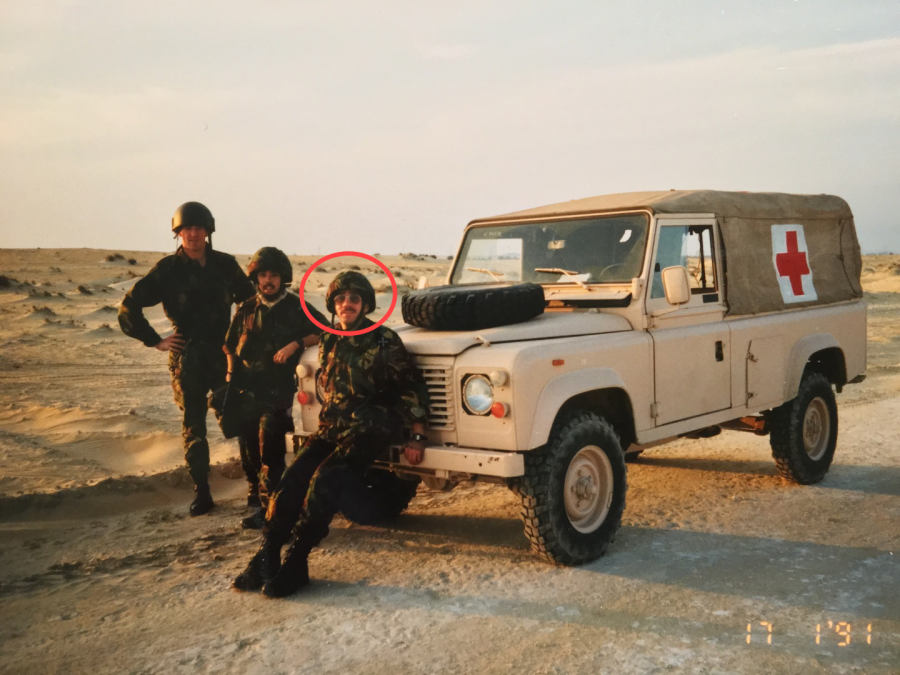 Duncan Stubbs, Paul Fawcus and Malcolm Goodman - travelling between Al Jubayl and the Field Hospital (17 Jan 1991)
“…currently we’ve had so many apparently experimental and unproven injections my arm is like a pin cushion, but we need the protection so for now not worrying about the long term effects…!”
The fear of air attack remained with us 24 hours a day, none more so than when driving one of our ‘ambulances’ between the various locations.
Often with just three of us on our own in the desert and with no communication equipment when away from our base, there was still a terrible fear of the smoke we had to constantly look out for that could be the sign of yet another attack, with no option but to ‘mask up’ and take cover in the vehicle.
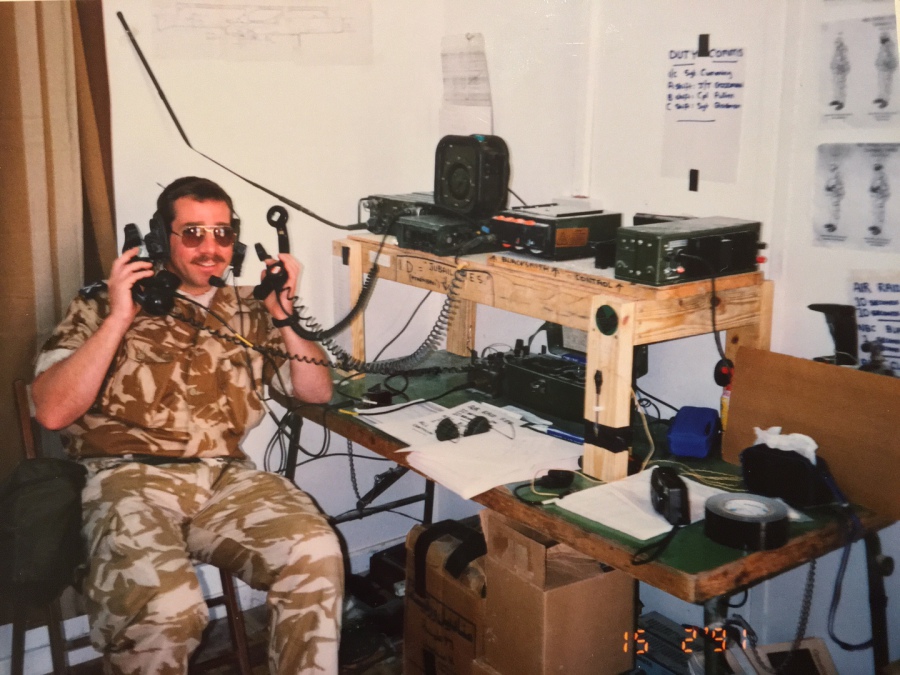 Malcolm Goodman (Duty Comms Team), Al Jubayl Field Hospital Communications Hut (15 Feb 1991)
At some point, though I forget when, I was also assigned to the ‘comms’ team. My duty being to sit in a communication shed using the various ‘scrambled’ Ptarmigan and ‘open’ radio equipment available to keep updated with aircraft movements and contact ground units, whilst also having the responsibility of providing the hospital with back up air raid warnings, which in the case of a ‘nuclear attack’, I felt might be rather pointless…!
It’s a strange fact of life that when experiencing such fear whilst sheltering from air raids, when at times you may well be moments away from death, with your band colleagues to whom you’ve now become so close, and upon whom you now rely, there are moments of ‘humour’, not unreminiscent of the TV programme ‘Dads Army’ (!) that with such a unique comradery gets you through such moments of terror. I recall one air raid when I couldn’t breathe with my respirator on as I was having a frightening panic attack. Yet if I took my respirator off, I might suffer from the effects of nerve or chemical agents.
We’d been trained to watch each other’s eyes and pupils, looking for possible dilation that would signify nerve agent poisoning, at which time the combopen autoinjector would then have to be administered. However, on this occasion I was sitting opposite my band colleague Robin Taylor (a superb euphonium player who would later appear in the film Brassed Off). Robin managed somehow to calm me down, enabling me to keep my respirator on and thus avoid the potential consequences of taking a breath without its protection.
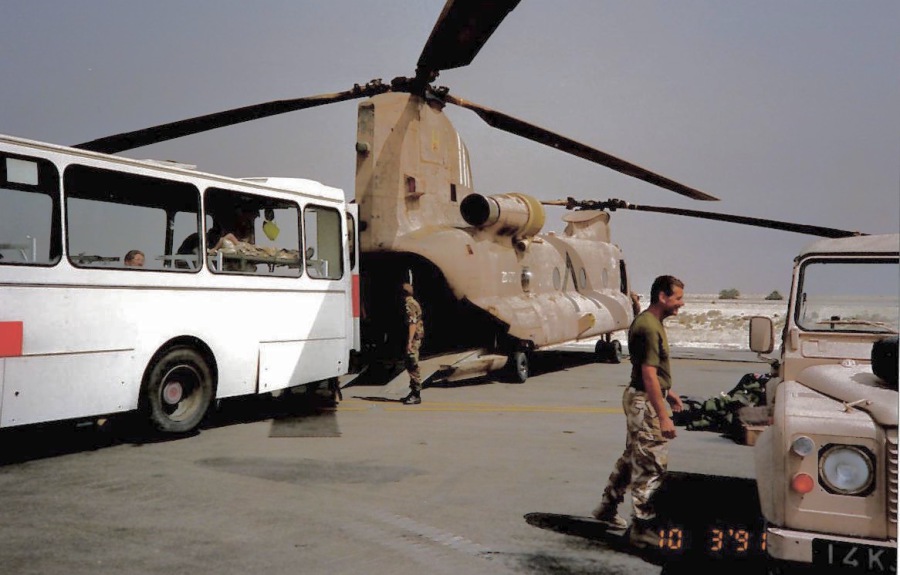 Casualty Transfer, Al Jubayl Field Hospital (10 Mar 1991)
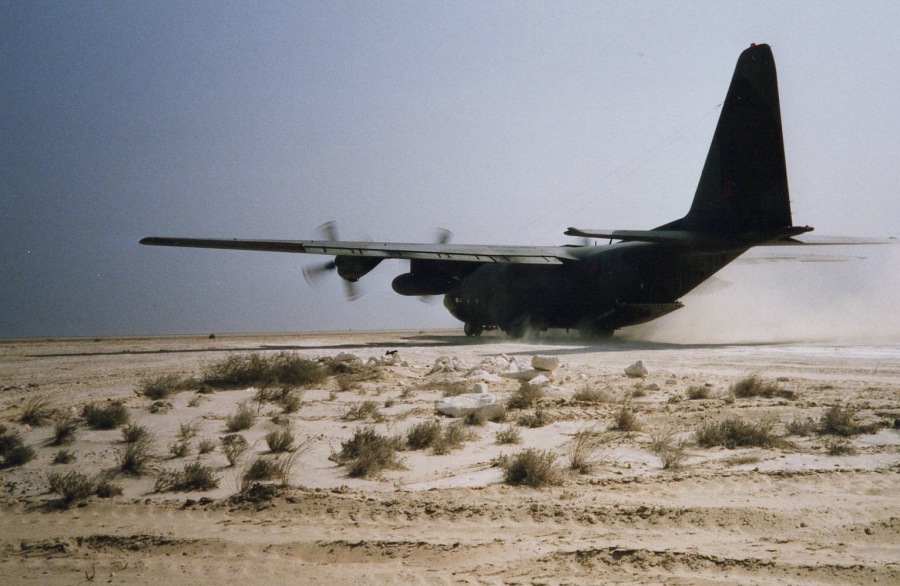
As the conflict developed further, we were involved with an increasing number of medevac flights, with casualties being transferred from Al Qasumah to our field hospital for further treatment. As a consequence, these now routine flights between the two band locations also enabled me to join a short RAF Hercules flight to Al Qasumah myself, with some BFBS video equipment to make some recordings of band members with the intention of sending home images to our families – such footage now becoming an interesting historic record of the Gulf War experience of Royal Air Force musicians.
Press enter or click to view image in full size
“…on Saturday we’re having a disco, but all wearing full uniform and carrying IPE and weapons, however as we’re expecting mass casualties by then I think the disco is unlikely to take place…”
Of course, back in 1991 there was no internet and computers were still in their infancy, so news from home was only possible through BFBS (British Forces Broadcasting Service) or through the military ‘bluey’ letters sent and received through the BFPO (British Forces Post Office), so the highlight of any day was receiving such a letter — from anyone!
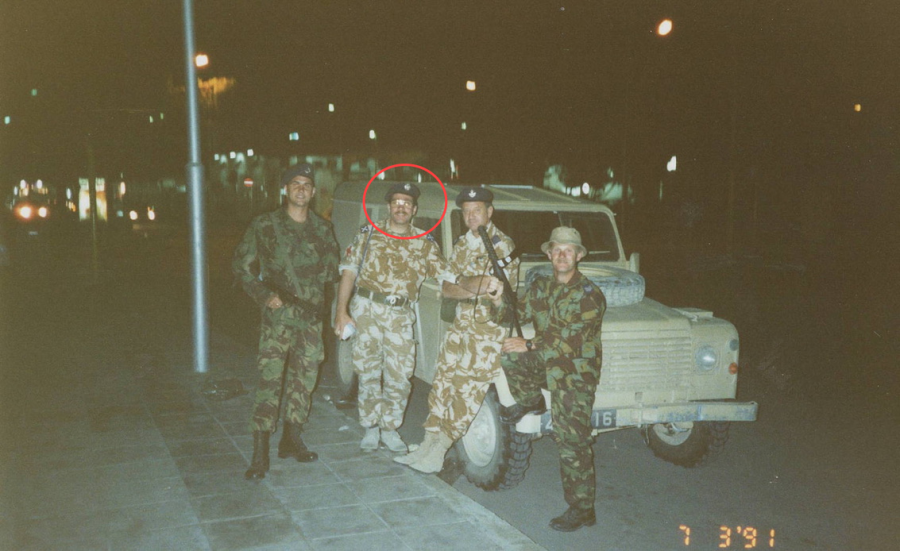 'Visiting' Al Jubayl City with RAF Western Band colleagues - Roger Clarkson (Trumpet), John Lambert (Bandmaster) and Roger Barcham (Clarinet) complete with loaded weapons for our security (7 Mar 1991)
As the weeks went by we had established a daily routine, closing our minds as much as possible to thoughts of family and home so we could focus on the needs of the mass casualties we were then being trained to expect. Then, as quickly as it had started, two months later for us it was over — although the risk of terrorist attacks remained. However, the relaxation of our military activities meant we could now undertake a brief and very strange ‘shopping trip’ to Al Jubayl city, but only with our own musician armed escort, so by no means ‘normal’ shopping.
Having had to remove my wedding ring for safety reasons many weeks earlier, and subsequently losing it, on the occasion of our ‘shopping trip’ I managed to buy a replacement ring that is now with me every day as a reminder of a time in my life, now 30 years ago, the memories and experiences of which will always remain…!
“…thoughts of coming home make us think of those who have been killed and will never return…the troops we see fly forward every day from our air head openly admit they don’t expect to be back…”
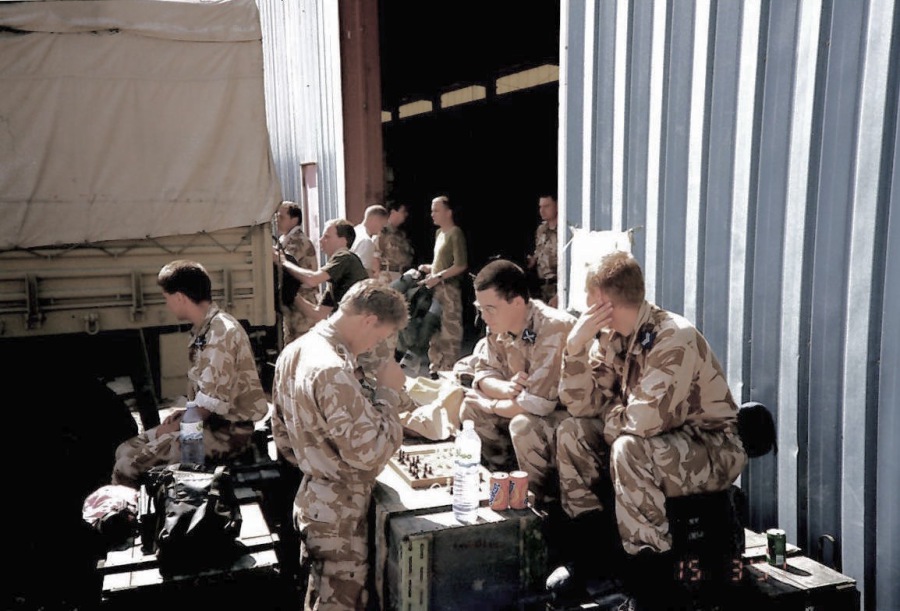
Finally, on 15 March 1991 we prepared for our repatriation back to the UK, and a home coming that owing to the unusual nature of our initial deployment was featured on BBC TV News — with tearful images as we were reunited with our families. However even that flight had been delayed so as not to conflict with a visit by HRH The Princess of Wales who the same day had been visiting RAF Locking to meet our families ‘left behind’…!
Having experienced such a unique moment in history together, all Royal Air Force musicians involved in the 1991 conflict have a very special bond of friendship that will remain with us for life…along with some memories of war we may never forget…
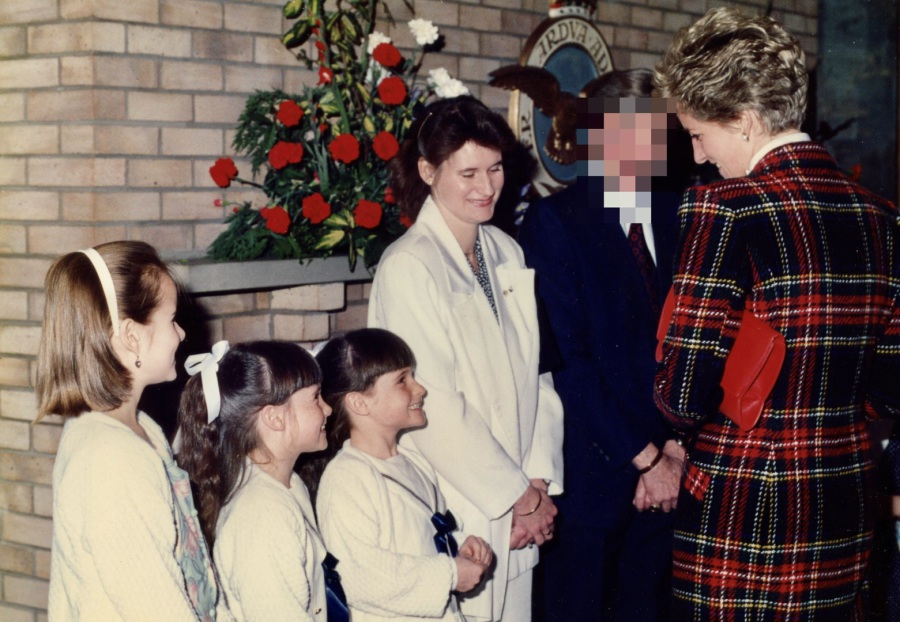 Sally Goodman and daughters Natasha, Rebecca and Louise with HRH Dianna The Princess of Wales (15 Mar 1991) when she visited RAF Locking to meet the families of those serving in the Gulf War
 Print
Print 